

Quantum sensors, deportations, inheritance law, post-industrial landscapes, medieval religious networks and moral responsibility became the subjects of six ambitious ERC Starting Grants awarded to researchers working in Poland.
The European Research Council has awarded 421 Starting Grants worth a total of €705 million to early-career researchers across Europe. The competition attracted a record 4,807 applications, with only 8.8% receiving funding. Among the successful researchers are six researchers who will carry out their projects at Polish universities and research institutions.
Their projects could hardly be more different. One researcher wants to use atoms as extraordinarily sensitive antennas. Another is investigating why countries resume deportations to countries previously considered too dangerous for return. Others are asking whether Central European legal ideas have been overlooked in comparative scholarship, how art can change the way we think about post-industrial landscapes, and how people navigate rules they do not know.
Together, the six ERC Starting Grants in Poland offer a fascinating snapshot of the questions being explored by researchers working in the country today.
From atoms to antennas: sensing the invisible
Imagine an antenna that does not rely on metal.
This is the idea behind QURA – Quantum Rydberg Antenna Systems, the project led by Prof. Michał Parniak at the University of Warsaw’s Faculty of Physics and Centre of New Technologies.
Instead of using conventional electronic components to detect electromagnetic waves, Parniak and his team will use Rydberg atoms, atoms in highly excited states that can act as extremely sensitive quantum sensors. The project aims to develop new ways of detecting electromagnetic fields ranging from microwaves through millimetre waves to the terahertz range.
Why does that matter?
Better electromagnetic sensing could have applications far beyond the laboratory. The project could contribute to future wireless communications, including 6G and beyond, highly sensitive passive radar systems, space radiometry and fundamental research such as searches for dark matter.
Parniak’s project is an example of research where a seemingly unusual idea: using atoms instead of metal to detect waves that could open up entirely new technological possibilities.
And it is not Parniak’s first major research project supported in Poland. His work has been developed within a broader research environment at the University of Warsaw and the Centre of New Technologies, where quantum technologies, sensing and quantum communication are among the areas of research.
Why are deportations becoming acceptable again?
The second project begins with a question that sounds less like science and more like a headline:
Why do countries sometimes resume deportations to places that were previously considered too dangerous for people to be sent back to?
Dr Agnieszka Radziwinowiczówna, from the University of Warsaw’s Centre of Migration Research, will investigate precisely this question in her ERC project RE-legitimised Deportations to Insecure Countries: REdefining the Concept of the Deportation Regime.
Her research will examine how deportations to countries affected by war, political instability or other serious risks can once again become legally possible and socially acceptable.
The project will look at deportation through four interconnected dimensions: legal, political, discursive and social, and will examine cases involving Poland, Germany and the United States.

The subject builds directly on Radziwinowiczówna’s previous research. Her NCN-funded projects have examined how deportation is used as a tool of migration management, including the treatment of EU citizens in the United Kingdom after Brexit. Her new work moves the question into an even more challenging area: how geopolitical change can transform the boundaries of what societies consider legitimate.
The University of Warsaw describes the project as the first ERC grant for research on contemporary migration to be carried out in Poland.
What happens when you break a rule you did not know existed?
At the Jagiellonian University in Kraków, Dr Piotr Bystranowski is investigating a deceptively simple problem: can we really blame people for breaking rules they did not know existed?
His project explores the tension between the familiar legal principle that ignorance of the law does not normally excuse a violation and our everyday moral intuitions.
Consider a person who moves to another country and unknowingly breaks a local social convention. Or someone who violates a complicated regulation without realising that the rule applies to them.
Is that person as responsible as someone who knowingly broke the rule?

Bystranowski will investigate these questions using experimental philosophy, comparing how non-lawyers, lawyers and people raised in different legal and cultural systems judge situations involving normative ignorance.
The research could have implications well beyond philosophy. As legal systems become more complex and people’s lives increasingly cross national, cultural and digital boundaries, the gap between what the rules say and what people actually know may become important.
Bystranowski’s route to the ERC has also included several stages of support from Poland’s research funding system. He previously received NCN funding through the PRELUDIUM and ETIUDA programmes and currently
leads an OPUS project.
Can art help us imagine a post-industrial future?
Some of the most interesting questions in science do not begin in a laboratory.
For Dr Mateusz Chaberski, they begin in places shaped by mines, factories, migration and decades of industrial development.
His ERC project, Friction Zones: Cultural (Re)Presentations of Central European Post-Extractive Landscapes Beyond Greening, focuses on the cultural meaning of landscapes left behind by industrialisation.
After the Second World War, large numbers of people moved from rural areas to work in mines and steelworks in Upper Silesia, to settle parts of western Poland, or to help build industrial cities such as Nowa Huta. Today, artists and theatre-makers are returning to these histories, exploring the relationship between industrial communities and the environments in which they lived.
Chaberski will study these artistic projects and performances to ask a broader question:
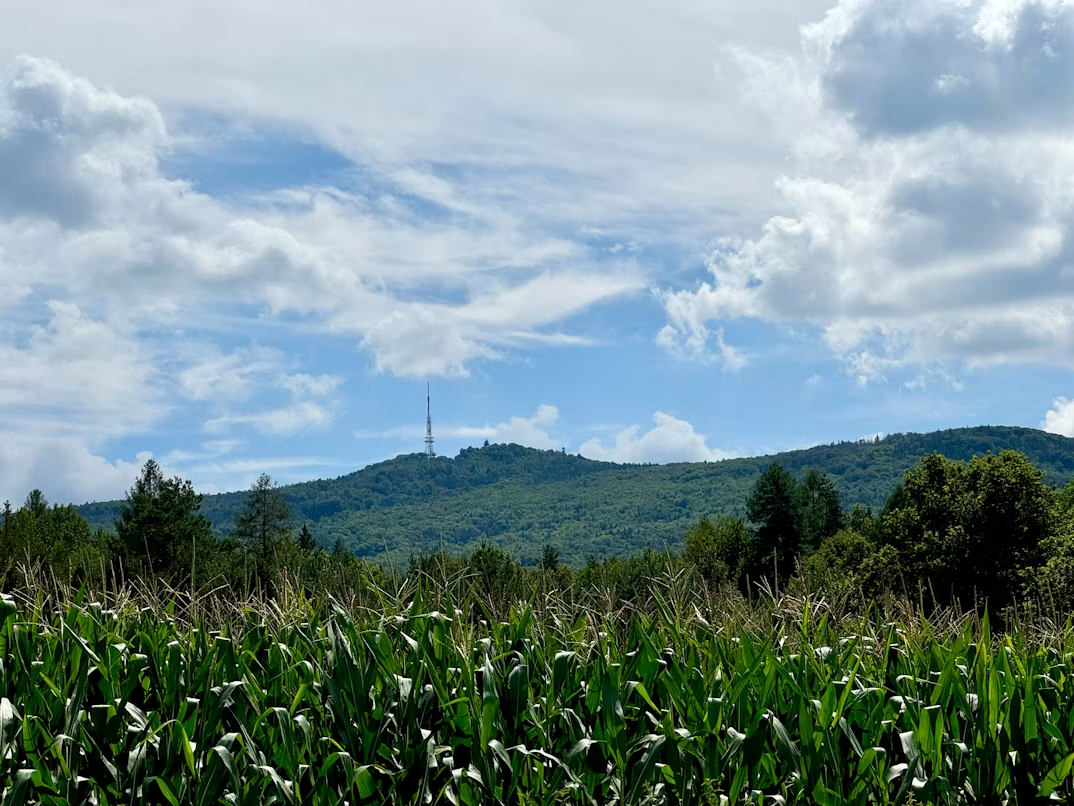
What happens when we stop thinking about post-industrial regions simply as places that need to be “made green” and start thinking about them as landscapes carrying memories, conflicts and identities?
The project connects environmental humanities, performance studies and contemporary art. It also brings research into direct contact with artists, activists and local communities.
For the Jagiellonian University, the grant has a particular significance: it is the first ERC Starting Grant awarded to its Faculty of Polish Studies and the first ERC Starting Grant in Poland in the field of cultural and arts research.
A hidden network connecting Eastern Europe and the Mediterranean
The past can look very different when we stop viewing European history as a collection of separate regions.
Dr Melchior Jakubowski, a historical geographer and landscape historian at the Tadeusz Manteuffel Institute of History of the Polish Academy of Sciences, will investigate precisely these connections.
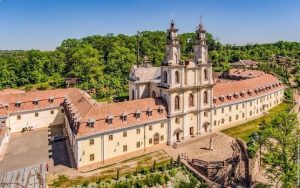
His ERC project, Basilian Entangled Networks: People, Ideas, and Art in Early Modern Eastern Europe and the Mediterranean, focuses on the Basilian order, an important religious network whose approximately 150 monasteries were spread across the Polish-Lithuanian Commonwealth in the eighteenth century. Rather than treating these monasteries as isolated institutions, Jakubowski will investigate the movement of people, ideas and artistic forms between them and across wider European networks.
His earlier NCN-funded SONATINA project used digital tools to investigate the artistic network of the Basilians and to ask whether the order developed a distinctive artistic style or operated according to models associated with other religious orders, particularly the Jesuits.
The new ERC project takes that research further, connecting the history of Eastern Europe with the wider Mediterranean world.
It is also a reminder that research into Europe’s past can challenge modern assumptions about where cultural influence came from and who was influencing whom.
What can Central European inheritance law teach Europe?
Our final story starts with something almost everyone encounters at some point: inheritance.
Who should inherit your home? What happens when you live with a partner but are not married?

Should the law treat a long-term unmarried couple differently from a married couple?
Dr hab. Dorota Miler, professor at the University of Gdańsk’s Faculty of Law and Administration, will explore these questions in her ERC project Beyond Western Europe: Uncovering the Neglected Succession Law of Central Europe (CESuccess).
The project challenges an assumption that has shaped much comparative legal research: that legal innovation tends to move from Western Europe towards Central Europe.
Miler will examine succession law across Central Europe and investigate whether the region has developed (or could develop) legal solutions that respond particularly well to the realities of contemporary families.
One example is the position of unmarried partners. In Poland, partners who live together without marrying do not automatically inherit from one another under statutory succession rules. Yet unmarried partnerships are increasingly common, while some European countries have introduced forms of inheritance protection for partners.
Miler’s research asks not simply whether Central European law should follow Western models, but a more interesting question:
What if Central Europe has ideas of its own that could contribute to the future of European law?
The five-year project has received €1.5 million in ERC funding. It is the third ERC grant awarded to the University of Gdańsk.
Six projects, one research ecosystem
The six researchers work in very different disciplines. Yet their career paths reveal something they have in common.
All six have carried out or are currently carrying out research supported by Poland’s National Science Centre (NCN).
Their stories therefore illustrate something more significant than a single successful ERC competition.
Research careers are rarely built around one grant. They develop through a sequence of opportunities: early research experience, international collaboration, smaller projects, increasingly ambitious questions and eventually the ability to lead an independent research programme.
The paths of the six new ERC grantees show how that progression can take place within Poland’s research system.
And the subjects they have chosen are strikingly diverse.
One project asks how atoms could become sensors. Another examines why deportations can become legitimate again. A third investigates what happens when we break rules we did not know existed.
The questions then move from technology and migration to culture. Art becomes a way to imagine life after industry, while another project reconstructs networks connecting Eastern Europe and the Mediterranean centuries ago.
The final project looks at Central European law, asking whether its ideas have been overlooked when we imagine the future of European families.